Species assessment · Exclusion · Responsible prevention
Bird & Pigeon Control
Bird activity on a balcony, ledge or commercial structure needs a solution suited to the species and site. Absolute Pest Solutions helps Fraser Valley and Lower Mainland customers assess roosting, access and prevention options without treating every bird as a pest.
In this guide: Assessing the problemNests and legal requirementsNetting and exclusionDroppings and cleanupPreventionQuotationsFAQs
Start with the species, location and actual impact
Birds feeding briefly in a garden are different from birds repeatedly roosting above a busy entrance. The assessment should identify the bird, how the area is being used and what conflict needs to be resolved. Noise, droppings, nesting material and blocked access may each call for a different response.
Feral pigeons, also known as rock pigeons or rock doves, commonly use building ledges and sheltered structures. Other birds may look superficially similar or use the same property at different times. Species identification matters for selecting measures and checking legal requirements; a label such as “pest bird” does not remove those responsibilities.
Health Canada’s pigeon guidance describes how repeated roosting and droppings can affect buildings. The scale of the concern matters. A single dropping on an outdoor surface is not the same assessment as a longstanding accumulation inside a sheltered building space.
- Observe without disturbing: record where birds land, whether they enter a structure and whether nesting appears active.
- Describe the affected area: balcony, roof edge, signage, loading bay, courtyard or other accessible location.
- Identify access constraints: height, electrical equipment, fragile materials, public traffic and adjoining properties.
- Confirm authority: alterations to strata common property, rented premises or shared roofs may need owner or management approval.
Photographs taken from a safe position can help with an initial enquiry. Do not climb onto a roof, reach into a nest or move eggs to obtain a clearer picture. A site assessment may still be required before materials, access equipment or a final scope can be specified.
Bird nests and eggs: check the rules before work starts
Bird protection is not governed by one simple rule for every species. Federal migratory-bird requirements and British Columbia wildlife requirements can both be relevant. Occupied nests, eggs, young birds and some nests protected beyond the breeding period need particular attention. An apparently empty nest is not automatic permission to remove it.
Environment and Climate Change Canada’s nest-protection guidance explains the federal framework. The Province of British Columbia’s conflict-species information describes provincial considerations and species distinctions. The relevant requirements must be checked for the actual bird and proposed work.
A service plan may therefore require a different timing, a non-disturbing approach, specialist advice or a permit assessment. Booking a contractor does not itself authorize nest interference. We do not promise immediate removal of any nest merely because it is inconvenient or close to a building.
Where an activity creates a genuine damage or danger issue involving protected migratory birds, federal damage-or-danger permits may be relevant. Whether permission is available and who must obtain it depends on the circumstances. Prevention before nesting occurs is often more practical than attempting to resolve the matter after birds have established an active nest.
Do not seal birds inside. Netting, screens or closing an opening must not trap birds, dependent young or other animals. Nest status and occupancy should be assessed before exclusion, with a plan for checking the completed work.
Netting, screening and landing deterrents
The purpose of physical exclusion is to make a defined area unavailable for roosting or entry without creating a new hazard. The system must suit the species, structure, access requirements and maintenance conditions. A generic product attached to one visible spot may simply shift activity to the next unprotected ledge.
Bird netting for appropriate spaces
Netting may be considered for suitable enclosed or semi-enclosed spaces, but design and installation matter. Gaps, loose sections or poorly maintained material can undermine exclusion and create entanglement risks. The proposal should address attachment points, access panels, occupied areas and how the installation will be inspected and maintained.
Screening access points
Screening may help protect suitable openings when it preserves the building’s required ventilation, drainage and equipment clearances. A bird-control installation must not block a dryer exhaust, interfere with fire safety or compromise a roof or solar-panel system. Some work requires a building professional or approval from the relevant equipment installer.
Ledge deterrents and site-specific alternatives
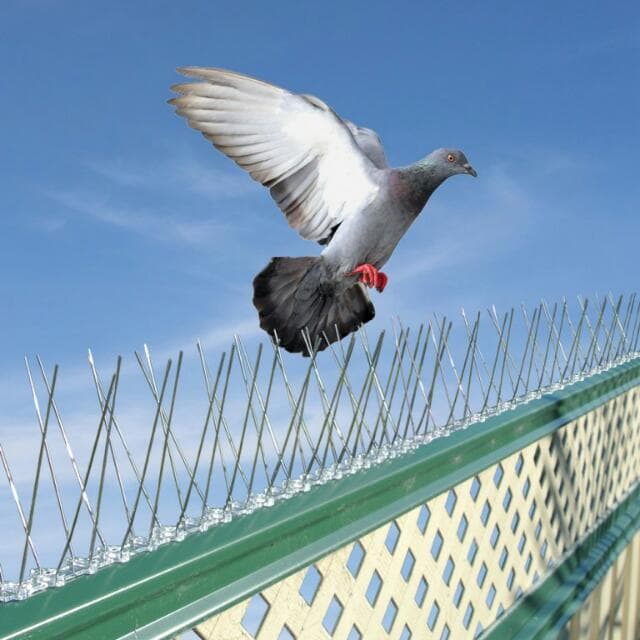
Suitable landing deterrents can discourage use of particular surfaces, but they are not a universal answer for every bird or structure. The aim is to prevent use, not injure animals. Product suitability, installation quality and the availability of nearby roosting sites should be discussed before work is approved.
Visual or sound deterrents may have limited or changing effectiveness as birds become accustomed to them. Health Canada’s pigeon-control resource discusses deterrence and exclusion options. A realistic quotation should state the area being protected and the limitations rather than guarantee that all birds will leave the neighbourhood.
Droppings and nesting material need a cleanup assessment
Accumulated droppings can require more than ordinary surface cleaning, particularly in enclosed spaces or where work may generate contaminated dust. The amount of material, ventilation, access, surface condition and intended work all affect the precautions. Do not assume that dry sweeping or pressure-washing a large accumulation is an appropriate first step.
WorkSafeBC’s histoplasmosis guidance addresses occupational exposure associated with disturbing contaminated material and the need for appropriate controls where a risk exists. The presence of birds does not establish that a particular disease organism is present, but potential exposure should still be assessed before dusty cleanup work.
Ask whether cleanup, waste handling and surface restoration are included or quoted separately from bird exclusion. Roof membranes, ventilation systems, electrical equipment and heavily contaminated insulation may require specialist services. A pest-control appointment should not be assumed to include every type of remediation.
Keep people and animals away from a significant accumulation until an appropriate plan is agreed. Where an active nest is involved, cleanup timing must also respect the applicable wildlife requirements. Do not remove nesting material first and ask about permission afterward.
Preventing recurring bird conflicts
Manage accessible food and waste, clean spills and avoid intentional feeding where it contributes to the conflict. Report damaged screens or exclusion systems promptly. A prevention system needs routine checking, especially after maintenance, storms or work that changes access to the protected area.
For a strata property, ensure residents and contractors know which installations must not be altered. For warehouses and commercial buildings, include loading doors, receiving areas, open waste handling and maintenance access in the discussion. Bird control is more durable when operating practices support the installation.
Plan building work with nesting risks in mind. The federal guide to reducing risks to migratory birds explains why timing and assessment matter. There is no single calendar date that makes all nests safe to disturb across every species and location.
Arrange follow-up according to the system and property. Useful checks include whether birds are finding gaps, whether fixings remain sound and whether maintenance has created a new route. The service agreement should identify who is responsible for inspection and repairs.
What affects bird-control installation costs?
Important factors include the species, size and shape of the protected area, attachment surfaces, access height, occupancy, nest status and the materials proposed. Specialist access equipment, permits, contamination cleanup and building repairs can change the scope. Photographs may support an initial discussion, but measurements and a site visit may be needed for a final quotation.
Before approval, confirm which surfaces or openings will be protected, how maintenance access will be retained, what cleanup is included and what inspection or warranty terms apply. Any limitations should be written clearly. A balcony and a large industrial overhang should not be priced as though they were the same installation.
Bird and pigeon control FAQs
Can a nest be removed just because it is on my property?
No automatic permission follows from property ownership. Species, nest status and federal or provincial requirements must be checked. Some situations require timing changes, specialist advice or permits before interference is lawful.
Is netting suitable for every balcony?
No. The structure, access, attachment points, ventilation and property permissions matter. The design must avoid trapping birds and remain maintainable. A site assessment helps determine whether netting or another method fits the area.
Will spikes stop all birds?
Not necessarily. Landing deterrents protect particular surfaces and must suit the species and site. Incomplete coverage or unsuitable placement can leave the underlying roosting opportunity unchanged. Discuss the intended function and limitations before installation.
Do you clean droppings as part of the installation?
Cleanup must be assessed and expressly included in the agreed scope. Significant accumulations or specialist surfaces may require separate remediation. Do not assume that an exclusion quotation includes decontamination, insulation replacement or restoration.
What should I do if young birds are present?
Leave them undisturbed and avoid closing their access. Report the situation before any work begins. The appropriate next step depends on identification, nest status and applicable protections; an injured or orphaned bird may need a wildlife rehabilitator.
Can you assess a commercial or strata property?
Yes. Provide the affected area, access information and the person authorized to approve work. A plan can then address installation, operations, inspection and any separately required cleanup or repairs.
Bird-control enquiries in our service area
We discuss bird and pigeon concerns in Abbotsford, Chilliwack, Mission, Langley, Surrey, Delta, Burnaby, Coquitlam, Vancouver and surrounding Fraser Valley and Lower Mainland communities. Explore commercial pest services, compare wildlife control, or return to the Pest Library.
Further reading: Health Canada: Pigeons; ECCC: Nest protection; ECCC: Damage-or-danger permits; British Columbia: Conflict species; WorkSafeBC: Exposure considerations. Legal requirements must be checked for the proposed activity and species.
Protect the right area with the right approach.
Email your bird-control enquiry with the service city, affected surface or opening, approximate height if known and the person authorized to approve work. Include photos taken from a safe location if available. We will discuss an assessment and clarify the proposed scope; a telephone call is not required.