
Identification · Web management · Prevention
Spider Control
Persistent webbing and unwanted indoor spiders can be addressed without treating every garden spider as a threat. Absolute Pest Solutions helps assess activity and practical control options for Fraser Valley and Lower Mainland properties.
In this guide: Spider identificationUnderstanding activityInspectionControl optionsPreventionPreparation and aftercareQuotationsFAQs
A spider sighting does not automatically mean an infestation
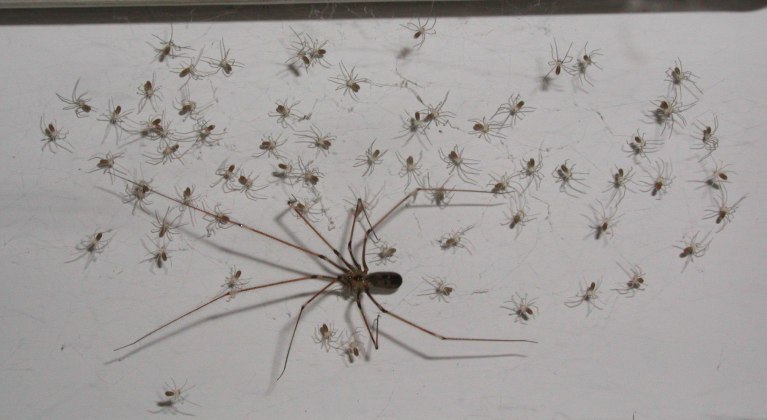
Spiders are arachnids, not insects. They have eight legs and two principal body regions, and they feed on other small animals. Most are beneficial predators. Finding one in a garage or garden does not establish a dangerous or widespread problem. Identification and the pattern of activity are more useful than the size of the spider or how startling the encounter was.
Common encounters include web-building house and cellar spiders, orb-weaving garden spiders and hunting spiders that do not use a capture web. The UC IPM guide to common spider groups explains why web form and behaviour can help identification. A spider walking across a floor may be behaving normally rather than emerging from a hidden “colony.”
Health Canada notes that spiders commonly occur in sheltered places and rarely bite people. Avoid handling unidentified spiders, especially in undisturbed storage. A clear photograph taken without contact can help an assessment. We do not identify a spider species from a skin lesion.
Suspected bites with concerning symptoms should be assessed by a healthcare professional. Most unexplained skin marks cannot be attributed to a spider merely because one was seen nearby. See HealthLink BC’s bite and sting guidance for health information rather than relying on a pest-control page for diagnosis.
Why spiders and webs appear in the same places
Shelter, available prey and access can influence where spiders are found. Exterior lights may concentrate flying insects, making nearby sheltered edges useful places for webs. Stored belongings, low-disturbance corners and gaps around doors can also deserve attention. These are inspection leads, not proof of another serious infestation.
Webs differ between spider groups, and old webs can remain after a spider has left. Record fresh rebuilding after cleaning, where live spiders are seen and whether activity is indoors or outdoors. One spider seen in daylight does not, by itself, establish severity. Some hunting spiders are active during the day.
The UC IPM spider management guide recommends focusing on hiding places, webs and access rather than routine pesticide use. That approach is especially useful when the concern is repeated web buildup around an entrance rather than a confirmed medically significant species.
For commercial properties, distinguish appearance-related maintenance from a pest risk that requires treatment. A loading-bay light, rarely cleaned storage rack and reception entrance can have different practical solutions. The scope should reflect the area actually affected.
What to document before requesting help
Tell us whether the issue is occasional sightings, frequent indoor spiders, visible egg sacs or exterior web accumulation. Include the rooms and approximate heights involved. Photograph the spider and the surrounding location when safe; a close image without context may not explain the access or cleaning challenge.
- Indoor areas: corners, storage, window frames, door thresholds and accessible service penetrations.
- Exterior areas: sheltered entrances, soffits, lighting and spaces around outdoor belongings.
- Recurring conditions: insect activity, clutter, damaged screens or areas that are difficult to clean.
- Access limitations: high ceilings, rooflines, electrical equipment, crawlspaces or restricted business areas.
An inspection can review accessible activity and identify practical next steps. It should not promise to find every spider in a building. Concealed or unsafe areas may need separate access arrangements. Do not climb onto furniture or enter a hazardous space to collect evidence.
Choosing proportionate spider control
Our recommendations begin with the evidence and the property’s use. Some concerns can be addressed mainly through cleaning, suitable exclusion and changes to conditions. Persistent activity in specific areas may justify targeted treatment. The aim is a manageable property, not an unrealistic promise that no spider will ever appear outdoors.
Web and harbourage management
Discuss which accessible webs and egg sacs can be removed safely and whether that work is included. High-level cleaning, fragile finishes and areas beside electrical equipment need particular care. A pest-control visit is not automatically a complete exterior washing or high-access cleaning service.
Entry points and related insect activity
Repair suitable screen and door gaps and assess recurring insect activity where it is actually present. Do not assume every spider indicates a separate infestation requiring another treatment. Recommendations should identify the evidence and distinguish customer maintenance from work included in the service.
Targeted applications, when warranted
Any pesticide use must be justified for the pest and site and follow the Canadian label. Outdoor vegetation, water, pollinators and non-target animals need consideration. A blanket application over the garden is not the default response to a few spiders. Ask which surfaces will be treated and what restrictions apply afterward.
Spiders themselves help suppress nuisance insects. UC IPM’s natural-enemies resource explains their value as predators. Treatment recommendations should therefore distinguish problematic indoor or building-related activity from beneficial spiders in an out-of-the-way garden area.
Practical prevention for homes and businesses
Maintain window and door screens, improve access around stored goods and keep rarely used belongings organized. Clean appropriate corners and surfaces routinely so new activity is easier to distinguish from old webbing. Wear suitable gloves when moving items in undisturbed storage, and avoid reaching blindly into concealed spaces.
Review lighting that concentrates insects close to entrances. Where lighting changes are practical, consider the building’s security and accessibility requirements as well as insect attraction. Address actual leaks or prey-insect sources through suitable maintenance rather than assuming spider treatment will solve those conditions.
A simple location log helps commercial staff report recurring issues consistently. “Webs beside the north entrance light” is more actionable than “spiders everywhere.” For strata properties, clarify whether the concern is inside a unit, on a balcony or in a common area so authorization and maintenance responsibility are clear.
Prevention is ongoing maintenance, not a permanent barrier. Outdoor spiders remain part of the surrounding environment, and changes to doors, lighting, landscaping or storage can alter activity. Review the areas that matter to occupants rather than trying to eliminate every spider on the property.
Preparation, re-entry and follow-up
Provide access to the agreed areas and follow the instructions for the actual service. Tell us about pets, aquariums, sensitive occupants and materials that should not be disturbed. An exterior-only treatment, a physical removal visit and an interior application can have different preparation and re-entry requirements.
Do not add retail sprays before or after the service without discussing them. Record any previous products so the technician can account for them. After treatment, ask when normal cleaning can resume and what new activity should be reported. Follow-up, where included, can review fresh webbing, sightings and outstanding recommendations.
If an inspection discovers rodent droppings or animal nesting material while investigating a sheltered area, do not vacuum that contamination as though it were ordinary webbing. Refer to our rodent cleanup guidance and obtain appropriate advice before disturbing it.
What affects a spider-control quotation?
The property size, affected interior or exterior areas, access height, extent of webbing and proposed methods influence the scope. Specialist access, extensive cleaning and building repairs may be separate. A small entryway concern and a warehouse with high-level webbing are not equivalent jobs.
Ask which areas are included, whether web removal is part of the service, how to prepare and what follow-up is available. Photographs and a brief history help the office discuss the enquiry. Any estimate should reflect the actual work rather than a claim that all spiders require the same treatment.
Spider control FAQs
Does one large spider mean there is an infestation?
No. Size and one sighting do not establish population or risk. The species, location, repeated evidence and conditions are more useful. A photograph can help determine whether further assessment is appropriate.
Are spiders a sure sign of another pest problem?
No. Spiders feed on other small animals, but their presence alone does not prove a separate infestation. Inspect recurring prey activity when evidence supports it, rather than automatically adding another pesticide treatment.
Can web removal help without pesticide?
Yes. Appropriate cleaning, reducing hiding places and repairing access gaps can be useful measures. The best approach depends on the location and extent of activity. A treatment application is not automatically necessary for every web.
Why do webs return after cleaning?
The location may still offer shelter and prey, or another spider may use it. Record how quickly fresh webs return and where. A practical plan may combine cleaning with access, lighting or other site changes.
Can you identify a spider bite?
No. Pest identification and medical diagnosis are different tasks. Skin marks have many possible causes, and a nearby spider does not confirm a bite. Seek healthcare advice for concerning symptoms and provide a safely obtained insect or spider photograph for pest identification.
Is exterior treatment included with an interior service?
Only when stated in the quotation. Mention garages, balconies, soffits and outdoor structures during the enquiry. Access and product restrictions may differ between these areas.
Local spider-control enquiries
We discuss spider concerns in Abbotsford, Chilliwack, Mission, Langley, Surrey, Burnaby, Coquitlam, Vancouver and surrounding Fraser Valley and Lower Mainland communities. Explore residential or commercial services, or compare silverfish and ant activity in the Pest Library.
Further reading: Health Canada: Spiders; UC IPM: Spider management; UC IPM: Common spider groups; UC IPM: Spiders as natural enemies; HealthLink BC: Bites and stings. Species distributions and product recommendations in foreign resources are not automatically applicable in British Columbia.
A practical response to recurring spider activity.
Tell us where spiders or webs are appearing and what you have already tried. We will discuss an appropriate assessment and a clearly defined service scope.
Find Spider Control in Your City
Explore local service information, preparation, follow-up guidance and written quote options across Metro Vancouver and the Fraser Valley. View all spider control service areas.