
Fabric pests · Inspection · Source removal
Carpet Beetle Control
Protect fabrics and stored belongings by finding what carpet beetle larvae are feeding on—not simply treating the adult beetles you can see. Absolute Pest Solutions assists homes and businesses across Greater Vancouver, the Lower Mainland and Fraser Valley.
In this guide: IdentificationDamage and sourcesTreatment approachPreparationPreventionCost factorsFAQs
Carpet beetles: identify the life stage first
The name can be misleading: a carpet beetle problem is not limited to carpets. Larvae may develop in natural-fibre belongings, lint accumulations, stored materials or an overlooked animal-related source. Adults and larvae look different, so finding a small beetle on a windowsill does not reveal where the damaging stage is living.
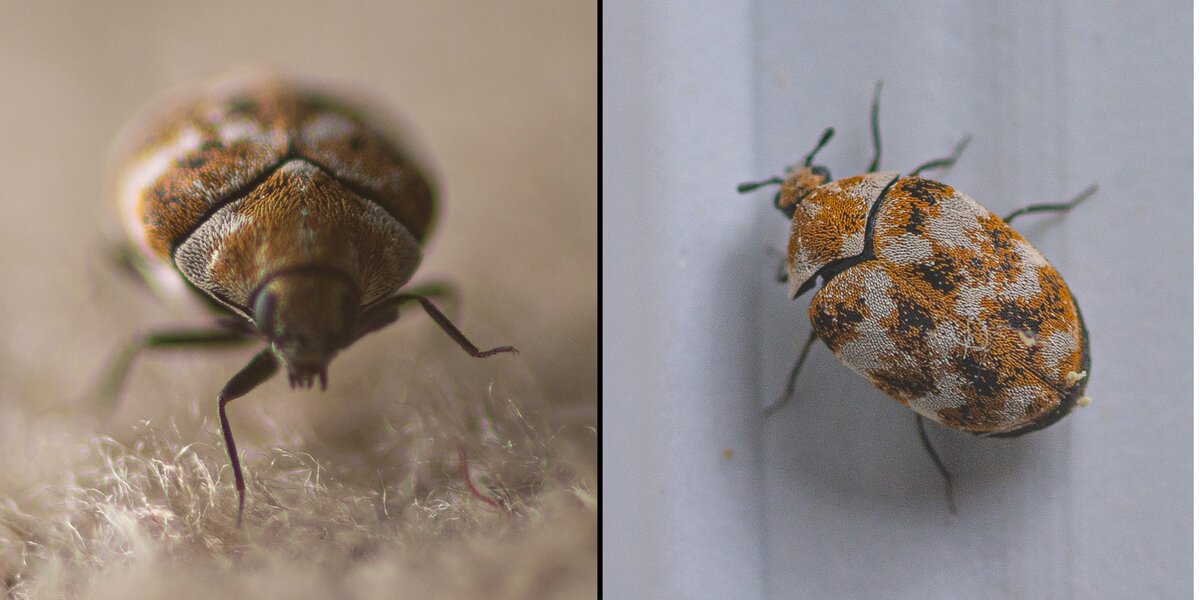
Adult carpet beetles are small, oval beetles. Some species have mottled scales; others are darker and more uniformly coloured. Larvae are elongated and visibly hairy. The larvae—not the adult beetles feeding on pollen outdoors—are responsible for most damage to susceptible household materials. Wool, fur, feathers, hair and other animal-derived materials can support them. See the University of California’s carpet beetle identification guide for photographs and life-stage distinctions.
Before requesting treatment, photograph the insect from above and beside it, ideally next to a ruler. A securely contained specimen can be more useful than a distant photograph. Note whether it came from a window, rug edge, wardrobe, vent, stored box or pet-resting area. That context helps separate an occasional outdoor adult from an established indoor larval source.
Carpet beetles, clothes moths or bed bugs?
Fabric damage can have more than one cause. Clothes moth larvae and carpet beetle larvae need different identification checks, while bed bugs are a separate blood-feeding pest rather than a fabric-feeding insect. Carpet beetles do not bite people; contact with larval hairs can irritate some individuals. Skin symptoms alone cannot confirm which pest, if any, is present. Seek medical advice for unexplained or persistent reactions and use physical evidence for pest identification.
Signs, hidden food sources and items at risk
Useful warning signs include larvae or shed larval skins near affected materials, irregular damage to vulnerable textiles, and repeated adult sightings indoors. One damaged garment does not establish the full extent of activity. Inspect related storage spaces before moving items into another room.
- Textiles and furnishings: wool rugs, upholstery containing animal fibres, felt, feathers, fur and natural-bristle items.
- Undisturbed edges: lint and pet hair beneath furniture, around baseboards, behind radiators and in storage corners.
- Stored belongings: seasonal clothing, blankets, decorative materials and items packed away without cleaning.
- Building-related sources: dead insects or old animal nesting material in inaccessible areas, where inspection is safe and lawful.
Oregon State University’s National Pesticide Information Center emphasizes locating the source rather than treating sightings in isolation. A recurring problem can continue when an overlooked source remains in an attic, dusty void or stored object. Do not dismantle ventilation equipment or disturb active bird or wildlife nests to investigate it yourself.
For a rental property or strata building, record the unit and room where evidence was found. A source may be confined to one item, but shared storage or adjoining spaces can complicate the investigation. Photos, a timeline and the location of damaged materials make the initial assessment more useful than a general report of “bugs everywhere.”
An inspection-led carpet beetle treatment plan
Our starting point is the evidence: the insect, affected material, distribution of sightings and access to likely sources. An assessment can distinguish a limited issue that mainly needs item care from a broader infestation requiring targeted pest-control work. Treatment recommendations should explain what will be addressed, what cannot be accessed and which steps remain the customer’s responsibility.
1. Locate and address the source
A plan may include careful vacuuming of appropriate indoor areas, removal of accumulated hair or dead insects, and isolation of affected belongings. The correct cleaning method depends on the material. Follow care labels and seek advice from a textile specialist for valuable rugs, delicate garments or collections. Pest treatment is not a substitute for conserving an irreplaceable item.
2. Consider targeted treatment where justified
Where inspection supports pesticide use, applications must be appropriate for the identified pest and permitted surface. A technician may recommend attention to specific cracks, edges or harbourage rather than unnecessary whole-room spraying. Products are not automatically suitable for clothing, bedding, food or every fabric. Preparation, access restrictions and re-entry instructions are determined by the actual service and product label.
3. Review evidence after service
A follow-up assessment should consider new larvae, fresh damage, remaining food sources and the locations of sightings—not just whether one adult beetle appeared. Keep a simple dated log. Ask whether follow-up is included in your quotation, when to report continued activity, and which cleaned areas should remain undisturbed after any application.
How to prepare without spreading the problem
Keep representative evidence before cleaning, then follow the preparation instructions provided for your property. Make affected wardrobes, rug edges and storage areas accessible without carrying loose suspect belongings through the building. Bag items before transport and separate cleaned items from unassessed ones. Explain any mobility or access limitations when booking so preparation can be planned realistically.
Avoid applying several retail products before the inspection. Record anything already used, including where and when it was applied. This helps the technician avoid conflicting treatments and evaluate the original activity accurately. Do not scatter mothballs in living areas or improvise pesticide mixtures; product restrictions and enclosed-space requirements matter.
Important: Routine carpet vacuuming is different from disturbing rodent or wildlife contamination. If an investigation reveals droppings, a carcass or nesting material, stop and obtain appropriate cleanup guidance rather than vacuuming the contamination.
Preventing repeat carpet beetle activity
Prevention focuses on making vulnerable materials easier to inspect and less attractive as food. Clean suitable textiles before storage, use well-sealed containers for susceptible belongings, and periodically check items that remain undisturbed for months. Maintain door and window screens to limit insects entering from outdoors. These steps reduce opportunity but cannot make a property permanently pest-proof.
Build cleaning around the places that are usually missed: under beds, along wardrobe floors, behind furniture and beneath seldom-moved rugs. A practical schedule is better than an intensive clean followed by months without checking. For pet-owning households, include areas where hair accumulates. The University of Florida’s carpet beetle guidance describes the importance of housekeeping and appropriate storage.
For offices, retailers, hospitality properties and textile storage, keep a receiving and inspection routine. Record which stock or room is affected, avoid combining suspect materials with clean inventory, and coordinate any pest work with normal cleaning and operations. A targeted inspection is especially useful when recurring activity appears near displays, furnishings or a consistently overlooked storage area.
What affects the cost and scope of service?
The size of the property alone is not enough to price a carpet beetle problem. The number of affected rooms, accessible evidence, type of furnishings, location of the source and need for repeat assessment all influence the work. Item cleaning, specialist textile restoration, building repairs and contaminated-material removal may be separate from pest treatment.
When requesting a quotation, provide the property type, approximate size, rooms involved, photographs and a short history of sightings. Ask for the proposed service areas, preparation requirements, follow-up arrangements and exclusions in writing. We will not assume that every beetle sighting requires the same treatment or promise an elimination date without assessing the circumstances.
Carpet beetle control FAQs
Does one adult carpet beetle mean my home is infested?
Not necessarily. An adult may have entered from outdoors. Repeated sightings, larvae, shed skins or damage to susceptible materials justify a closer inspection. The aim is to determine whether larvae are developing indoors and where their food source is located.
Do I need to throw out my carpet or clothing?
Not automatically. The material, degree of damage and ability to clean or treat the item matter. Isolate affected belongings and obtain suitable care advice before discarding them. Replacing a rug without finding the source can leave the underlying problem unresolved.
Can carpet beetles be mistaken for bed bugs?
Yes. Different insects and skin reactions are often confused. A close photograph or specimen helps distinguish hairy carpet beetle larvae from bed bugs. Do not choose a bed bug treatment based on itching alone; the inspection should establish which pest is present.
Will a single spray solve the problem?
It may not. A treatment that overlooks the infested material or source can miss the reason activity persists. Cleaning, item care, access to harbourage and monitoring should be considered alongside any warranted pesticide application.
Can you help in a condo, rental suite or business?
Yes, these property types can be assessed. Tell us whether you are the owner, occupant or property manager and describe access to affected spaces. Building-wide work or access to shared areas may require coordination with management.
What should I send when requesting help?
Send a clear insect photograph, the room and surface where it was found, any fabric damage, and how long activity has continued. Include details of previous products or treatments. Keep specimens contained and do not mail insects unless specifically instructed.
Carpet beetle help across our service area
Absolute Pest Solutions serves properties in Abbotsford, Chilliwack, Mission, Langley, Surrey, Burnaby, Coquitlam, Vancouver and surrounding Fraser Valley and Lower Mainland communities. Appointment availability and the appropriate service scope are confirmed for your property.
Unsure whether the issue involves fabric pests or stored food? Compare our pantry moth guide, silverfish guide and bed bug guide, or return to the Pest Library.
Further reading: UC IPM: Carpet beetles; Oregon State NPIC: Carpet beetles; UF/IFAS: Carpet beetles; Texas A&M: Stored-product and fabric pests. External resources provide general identification and prevention guidance; Canadian product labels and local requirements govern any treatment here.
Start with the source, not another guess.
Share your carpet beetle concerns with our office. We will discuss the evidence, the affected areas and a practical next step for your property.
Find Carpet Beetle Control in Your City
Explore local service information, preparation, follow-up guidance and written quote options across Metro Vancouver and the Fraser Valley. View all carpet beetle control service areas.