
Moisture checks · Targeted control · Practical prevention
Silverfish Control
Silverfish in bathrooms, laundry rooms or stored belongings call for more than treating the insect you last saw. Absolute Pest Solutions helps investigate activity and contributing conditions throughout Greater Vancouver, the Lower Mainland and Fraser Valley.
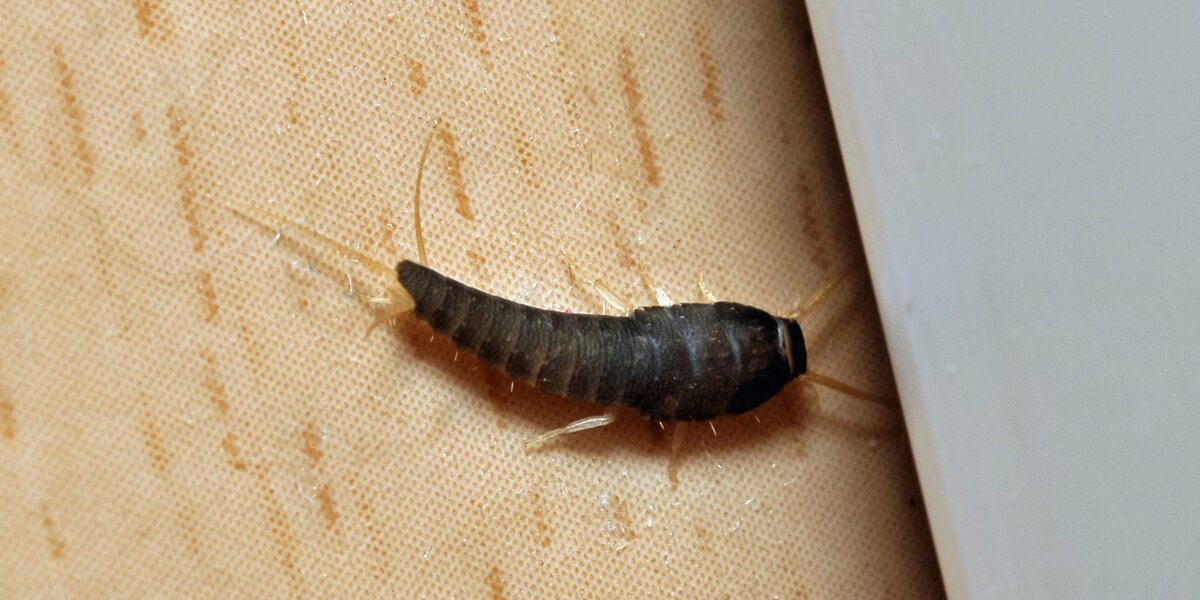
Recognizing silverfish and firebrats
Silverfish are wingless insects with a tapered body, long antennae and three tail-like appendages. They move quickly and usually avoid light. Their scaly appearance can look silver or grey. Firebrats are related insects with a more mottled appearance and a preference for warmer conditions. A clear, close photograph is useful because a fast-moving insect glimpsed at night can be misidentified.
Health Canada describes silverfish and firebrats as household pests rather than insects that attack people. Their importance usually relates to damage, nuisance and the conditions supporting them. Finding one insect does not by itself establish a widespread infestation or a building defect.
Booklice, springtails, small cockroach nymphs and other indoor insects can be confused with silverfish. Tiny pale insects around damp paper may require a different investigation from a clearly bristled, tapered silverfish. Keep a specimen in a closed container when practical, record its size and avoid using a skin symptom or a blurred photo as the sole basis for treatment.
Tell us whether the insect was inside a bathtub, on a floor, in a book, behind storage or near a warm appliance. Those observations help identify useful inspection areas without assuming every room needs the same work.
Why silverfish appear in bathrooms, basements and storage
Moisture, shelter and available food can make a space suitable for activity. Bathrooms, laundry areas, basement storage and concealed gaps are useful starting points for inspection. The location of a sighting is not always the source: an insect may travel from a nearby hiding place or become trapped on a smooth surface.
- Moisture conditions: plumbing leaks, persistent condensation, poor drying or damp stored materials.
- Concealed shelter: gaps around baseboards, utility penetrations, shelving and undisturbed storage.
- Susceptible materials: paper, adhesives and other accessible materials that can support feeding.
- Repeated introductions: belongings and packaging moved between storage spaces without inspection.
An inspection should separate a pest finding from a moisture diagnosis. Pest activity can justify checking a leak or ventilation concern, but it does not prove mould or hidden structural damage. Where a building issue is suspected, the appropriate contractor or property manager should assess it. Spraying does not repair a leak.
The Canadian Grain Commission’s identification resource provides further distinctions between silverfish and firebrats. Accurate identification is particularly useful when activity is associated with warm equipment rather than the damp spaces commonly associated with silverfish.
What damage and evidence should you document?
Look for repeated insects, cast skins and surface feeding or irregular damage to susceptible belongings. Paper and adhesive-related damage may be noticed in books, stored documents or wallpaper, but damage alone does not establish which pest caused it. Photograph the affected material and compare it with insect evidence from the same area.
For archives, offices or collections, material sensitivity matters. The Canadian Conservation Institute’s pest-sign guidance helps connect damage patterns with possible insects. Do not apply household pesticides directly to valuable books, artwork or documents. A conservation specialist may be needed for sensitive items.
A simple activity log can be useful: date, room, exact location, approximate count and any recent change such as a leak or newly moved box. Separate new damage from older wear so follow-up decisions are based on current activity. In a strata or rental property, share relevant findings with management when common areas or building repairs are involved.
How a silverfish control plan is developed
Our assessment considers the evidence, rooms involved, accessible hiding areas and conditions that may be sustaining activity. A treatment plan should distinguish immediate pest management from changes needed to reduce recurrence. It should also identify areas that cannot be assessed without additional access or building work.
Inspection and monitoring
Targeted monitoring can help establish where activity is concentrated. The information is most useful when locations and inspection dates are recorded consistently. Ask what you should report between visits and whether monitoring devices should be left untouched. Moving devices repeatedly makes trends harder to interpret.
Source reduction and suitable treatment
Recommendations may include reducing clutter, correcting moisture, protecting stored materials and treating selected harbourage where appropriate. Any pesticide application must be suitable for the pest, site and surface under its Canadian label. More product is not necessarily a better treatment, and dust should not be left as an exposed coating in occupied areas.
Preparation and follow-up
Make the affected baseboards and storage areas accessible according to your instructions. Tell the office about pets, aquariums, vulnerable occupants and any products already used. Re-entry and cleaning directions depend on the actual treatment; do not assume that a generic waiting time applies to every service. Follow-up should evaluate fresh activity and outstanding moisture or access issues.
Practical prevention for the Lower Mainland climate
Focus on conditions you can check and maintain. Report leaks promptly, allow damp areas to dry, use ventilation appropriately and keep stored goods away from persistently damp surfaces. Where humidity remains a concern, have the cause assessed rather than relying only on a dehumidifier or repeated pest treatments.
Replace damaged cardboard with suitable clean containers, keep important papers protected and avoid packing damp belongings into closed storage. Leave enough access around shelving to inspect and clean. Seal suitable gaps after the pest assessment, while preserving ventilation, drainage and any required building functions.
For businesses, assign responsibility for reporting leaks and inspecting vulnerable storage. A pest-control contractor, cleaner and maintenance team may each have different tasks. Written recommendations make those responsibilities easier to follow. The Canadian Conservation Institute’s prevention guidance is especially relevant for collections and document storage.
If very small insects persist around mould-prone materials, confirm whether they are actually booklice. University of Minnesota guidance on booklice explains why moisture-related insects need accurate identification rather than a one-size-fits-all spray.
What affects silverfish treatment pricing?
Relevant factors include the property size, number of affected areas, accessibility of storage and voids, evidence of sustained activity and the proposed monitoring or follow-up. Crawlspaces, extensive clutter or moisture problems may change the scope. Pest service should not be assumed to include plumbing, ventilation repairs or specialist restoration of damaged belongings.
Provide your community, property type, approximate size and the rooms where insects are being found. Photos and a sighting history help us discuss the next step. A written quotation should state which areas are included, how to prepare and whether additional visits are included or separately charged.
Silverfish control FAQs
Do silverfish bite people?
Silverfish are not a biting pest. Their presence is generally a nuisance or material-damage concern. Itching or marks should not be attributed to silverfish without considering other causes; persistent symptoms warrant medical advice.
Do they come up through the bathtub drain?
A silverfish found in a tub may have entered from the room and become unable to climb out. That sighting does not establish a drain source. Inspect nearby gaps, plumbing penetrations and moisture conditions rather than automatically treating the drain.
Does seeing silverfish mean I have mould?
No. Some conditions supporting silverfish can overlap with dampness, but insects are not a mould test. Report visible moisture problems and obtain a building assessment where necessary. Pest control and moisture remediation are separate decisions.
Will cleaning alone resolve the problem?
Cleaning and storage changes may substantially reduce favourable conditions. Established activity in concealed areas may require a broader plan. The right response depends on the evidence, source conditions and whether sightings continue after practical changes.
Should every room be treated?
Not automatically. The assessment should establish where activity occurs and what treatment is justified. Tell us about all affected rooms, including occasional sightings, so the scope is based on the property rather than a single insect photograph.
Can you inspect a crawlspace or shared building area?
Discuss access when booking. Safety, clearance, permission and the condition of the space determine whether it can be inspected and whether additional work is needed. Do not enter an unsafe crawlspace solely to collect pest evidence.
Silverfish help for local homes and businesses
We discuss silverfish concerns across Abbotsford, Chilliwack, Mission, Langley, Surrey, Burnaby, Coquitlam, Vancouver and surrounding Fraser Valley and Lower Mainland communities. For multi-unit properties, coordinate access and reporting with the owner, strata or property manager as appropriate.
Compare related guides for cockroaches, carpet beetles and ants, or browse the full Pest Library.
Address the activity and the conditions behind it.
Share the rooms involved and any photos with our office. We will discuss an appropriate silverfish assessment and the information needed for a quotation.
Find Silverfish Control in Your City
Explore local service information, preparation, follow-up guidance and written quote options across Metro Vancouver and the Fraser Valley. View all silverfish control service areas.