
Identification · Nest assessment · Risk reduction
Wasp & Hornet Control
An active nest beside a doorway needs a different response from a few wasps visiting flowers. Absolute Pest Solutions helps assess wasp and hornet concerns across Greater Vancouver, the Lower Mainland and Fraser Valley, with attention to the insect, location and people using the property.
In this guide: Wasps or bees?Nest locationsImmediate precautionsService approachAftercarePreventionCost factorsFAQs
Identify the insect before deciding to remove a nest
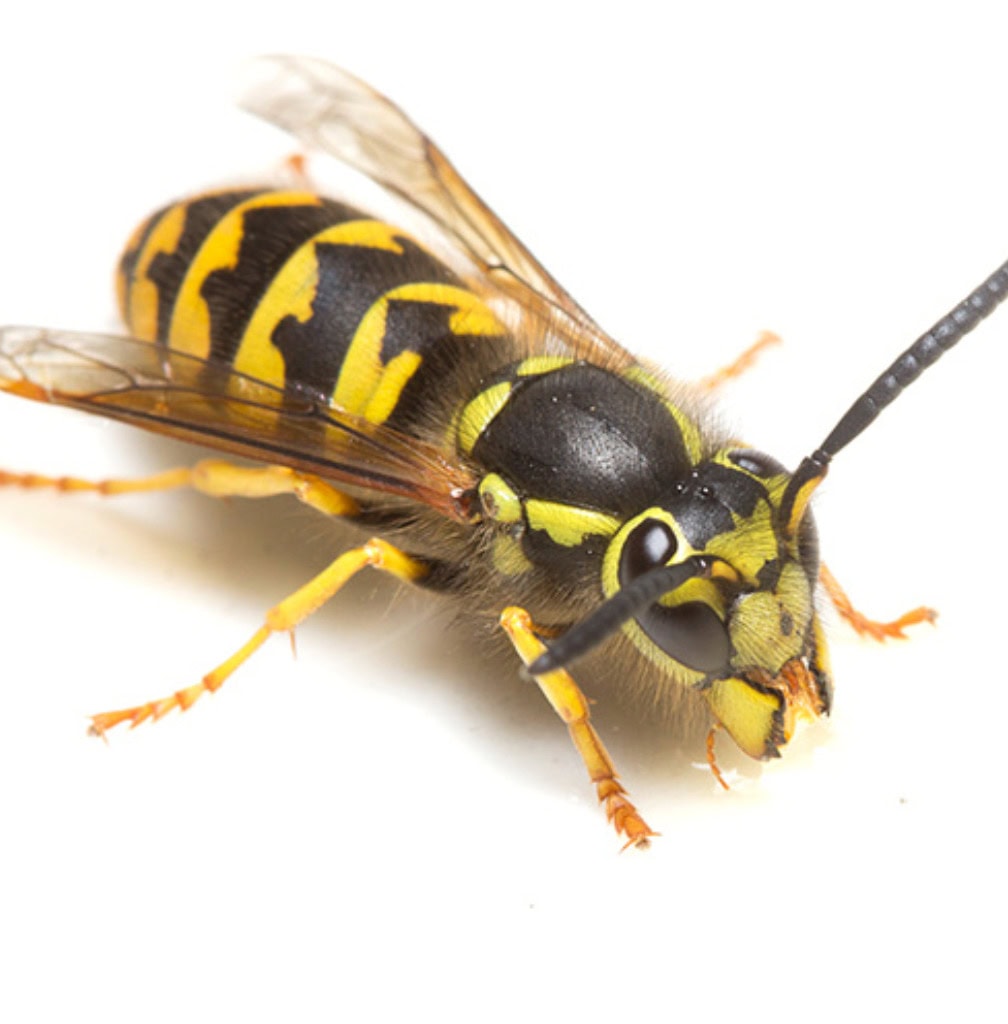
Wasps, hornets and bees are often grouped together in everyday conversation, but the correct response depends on identification. A photograph taken from a safe distance can help. Do not approach an active nest to obtain a close-up or attempt to capture a stinging insect for identification.
Many wasps are useful predators, and some contribute to pollination. Their presence outdoors does not automatically justify treatment. Nest proximity to people, the species and the likelihood of disturbance are more useful considerations than the insect’s appearance alone. Health Canada’s wasp guidance explains these roles and the need to assess the situation.
Yellowjackets, paper wasps and bald-faced hornets
Paper wasps often build exposed, open-celled nests under shelter. Yellowjackets may use ground cavities or concealed spaces as well as other nest sites. Bald-faced hornets are social wasps associated with enclosed aerial paper nests. Nest form is a useful clue, but it is not a reason to disturb the nest. The UC IPM social-wasp guide illustrates the differences.
Bees and solitary wasps need a different decision
A cluster of bees or a bee colony should not be treated as a wasp nest without identification. A beekeeper or other appropriate specialist may be the better contact. Solitary wasps also differ from social nest-building species. Explain what you see and where; we can discuss whether an assessment, a referral or leaving the insects undisturbed is appropriate.
Visible nests and hidden entry points
A visible nest under an eave is different from a stream of insects entering a siding gap. In a concealed nest, the opening you can see may be some distance from the nest itself. The inspection must consider the structure and access rather than assume the entire nest can be removed through the entrance.
- Soffits, eaves and overhangs: note the approximate height and whether the nest is exposed or behind a surface.
- Wall or roof cavities: record the entry location and any insects appearing indoors without opening the structure yourself.
- Ground-level openings: keep mowing, digging and foot traffic away from the suspected nest area.
- Trees, sheds and outdoor structures: describe the distance from paths, doors, play areas and neighbouring properties.
Do not plug an active wall entrance before assessment. Trapping insects inside a cavity can lead to activity elsewhere in the building. Penn State Extension’s yellowjacket guidance specifically cautions against closing an active exterior entrance. Repairs and sealing should be considered as part of the service sequence, not an improvised first step.
If access requires roof work, a ladder or opening building materials, tell the office before booking. Pest treatment, physical nest extraction and structural repair are separate tasks. A quotation should make clear which are feasible and included.
What to do while waiting for an assessment
Keep people and pets away from the immediate area and avoid disturbing the nest or its supporting structure. Use a different entrance where practical. Inform staff, residents or contractors who might unknowingly work nearby. A safe observation of the location is enough; do not stand beside it to count insects.
Avoid striking, burning, flooding or pressure-washing a nest. Do not combine pesticides or apply flammable liquids. Disturbance and unsafe access can create more risk than the original problem. The Canadian Centre for Occupational Health and Safety recommends assessing stinging-insect hazards before work and obtaining appropriate help for nest removal.
A severe allergic reaction is a medical emergency. Call 911 for signs of a serious reaction after a sting, such as breathing difficulty, throat swelling or collapse. Pest-control service is not emergency medical care. See HealthLink BC’s sting-allergy information.
Tell us about known sting allergies and requests to avoid particular products or fragrances when making the enquiry. Those concerns affect planning, but they do not establish that every nest can be removed without treatment. The available method must be assessed for the actual location and access.
How wasp and hornet service is planned
We review the reported insect, nest location, activity and access. Photos are helpful when they can be taken without approaching the hazard. The technician considers whether intervention is justified, how people can be kept away during the work and what limitations apply to concealed or elevated areas.
Depending on the findings, the plan may involve a suitable registered treatment, physical removal where appropriate, monitoring or another site-specific approach. A treatment that reduces nest activity is not necessarily the same service as extracting every piece of a nest from inside a wall. Confirm what the quotation covers.
Any pesticide use must follow its Canadian label, including the application site and precautions. The work should account for nearby doors, windows, occupied spaces, animals and public access. Restrictions on approaching the area after service depend on the actual method, not a universal online waiting time.
A nest that is well away from human activity may sometimes be monitored rather than removed. The City of Richmond’s wasp guidance encourages assessing whether a nest can be avoided. Our purpose is to address a genuine conflict, not eliminate beneficial insects throughout the garden.
After treatment or nest removal
Follow the instructions about keeping the area clear, observing remaining activity and reporting concerns. Do not immediately open the cavity, seal the entrance or remove treated material unless that step has been agreed. An exposed nest and a concealed nest may have different aftercare requirements.
Ask when continuing activity should be reported and whether a return visit is included. Provide the location and pattern rather than approaching closely to investigate. Wasps visiting a nearby food source may not all belong to the treated nest, so continuing outdoor sightings need context.
Once activity has been assessed, suitable repairs can reduce future access to the same sheltered space. Preserve ventilation and drainage when repairing soffits or siding. A pest service does not automatically include carpentry, roof repair or finishing work.
Reducing avoidable wasp conflicts
Manage outdoor food and waste, clean spills and maintain bins so they close properly. Inspect accessible sheltered areas from a distance when maintaining the property. Report repeated traffic into a building gap early rather than waiting until contractors need to work beside it.
Traps may catch some foraging wasps, but they are not a reliable substitute for assessing an active nest. Their attractiveness varies by species. University of Maine Extension explains why a trap that catches yellowjackets may not be effective for other social wasps. Placement and the actual source of activity matter.
For patios, schools, strata walkways and commercial entrances, keep a clear reporting process. Record the location and restrict access to an identified hazard where practical. Prevention should balance normal outdoor use with the beneficial role of insects, rather than promise that no wasp will ever visit the property.
What affects nest-removal pricing?
The nest’s location, height, visibility, number of nests and access requirements influence the work. An exposed nest within straightforward reach differs from a concealed colony beneath roofing or inside a wall. Physical extraction, specialist access and building repairs should be discussed separately when relevant.
Send a safe-distance photograph and describe the property, nest height and nearby access routes. Tell us whether the insects are also entering living areas and whether an attempted treatment has already occurred. We can discuss a proposed scope and confirm appointment availability without promising the same method or price for every nest.
How to report a concealed or elevated wasp nest safely
Wasps repeatedly entering a siding gap, ground opening or roof edge may indicate a concealed nest, but the visible entry point does not establish the nest size or exactly where it sits. The assessment also depends on safe access, the insect involved and how nearby people use the space.
Do not climb a ladder, reach into a wall opening or approach the flight path to get a picture. Do not seal an active entrance; disturbing or redirecting activity can increase the risk to occupants.
- Location: identify the side of the property, approximate level and whether the insects use a visible nest, cavity or ground opening.
- Exposure: describe how close the activity is to doors, walkways, patios, work areas and people who may be vulnerable to stings.
- Images: share a photo only if it can be taken from a safe distance without standing in the flight path.
- Service scope: ask whether the proposal covers treatment of activity, removal of an accessible nest or additional access work; these are not interchangeable.
For a nest-specific service enquiry, see Wasp Nest Removal — Assessments. An urgent allergic reaction or severe symptoms require appropriate emergency medical assistance; a pest-service appointment is not emergency medical care.
Wasp and hornet control FAQs
Do all wasp nests need to be removed?
No. A nest that can be avoided and poses little conflict may not need treatment. The insect, location and likelihood of disturbance should guide the decision. A nest beside a frequently used doorway is a different situation from one in an isolated area.
Can you provide a chemical-free removal?
Discuss that requirement before booking. Feasibility depends on the insect, nest construction, access and safety considerations. Do not assume that a concealed or high nest can be removed by the same method as an accessible exposed nest.
Should I seal the hole where wasps enter the siding?
Not while it is an active, unassessed entrance. Sealing it can leave insects inside the structure and change where they emerge. Ask the technician when any repair or exclusion work should occur.
Will the nest be physically removed?
That depends on its location and the agreed scope. Treatment of a concealed nest does not automatically include opening walls or extracting the nest material. Confirm what removal, access and repair work are included in the quotation.
What if the insects are bees?
Identification comes first. A bee swarm or colony may require a beekeeper or another suitable specialist rather than wasp treatment. Keep your distance and provide a photograph only when it is safe to do so.
Does seeing wasps after service mean it failed?
Not necessarily. Remaining activity needs to be interpreted against the method, timing, location and possible nearby food sources or other nests. Follow the reporting instructions and do not disturb the serviced area to investigate.
Local wasp and hornet enquiries
Absolute Pest Solutions assists customers in Abbotsford, Chilliwack, Mission, Langley, Surrey, Delta, Burnaby, Coquitlam, Vancouver and surrounding Fraser Valley and Lower Mainland communities. For a nest-specific request, visit wasp nest removal. Explore other insects in the Pest Library or discuss a commercial property through our commercial services page.
Further reading: Health Canada: Wasps; CCOHS: Working safely around stinging insects; UC IPM: Social wasps; Penn State: Concealed yellowjacket nests; HealthLink BC: Sting allergies. Canadian product labels govern any pesticide use here.
Get the nest assessed before disturbing it.
Share the location, approximate height and a safe-distance photo. Our office will discuss the appropriate next step and what the proposed service includes.
Find Wasp & Hornet Control in Your City
Explore local service information, preparation, follow-up guidance and written quote options across Metro Vancouver and the Fraser Valley. View all wasp & hornet control service areas.