
Home / Pest Library / Wildlife Control / Skunk
UNDER-DECK DENS · LAWN DIGGING · SKUNK ACTIVITY
Skunk Control
Skunk odour, digging near your lawn or an animal sheltering beneath a deck? Absolute Pest Solutions can review the situation, identify attractants and discuss appropriate wildlife prevention or exclusion measures across Greater Vancouver, the Lower Mainland and Fraser Valley.
Explore this guide: Common signs of skunks around homes and yards Our approach to investigating a possible skunk den Responsible skunk prevention and exclusion What to do when a skunk is near pets or has sprayed Steps homeowners and managers can take FAQs Next steps
IDENTIFY WHAT IS HAPPENING
Common signs of skunks around homes and yards
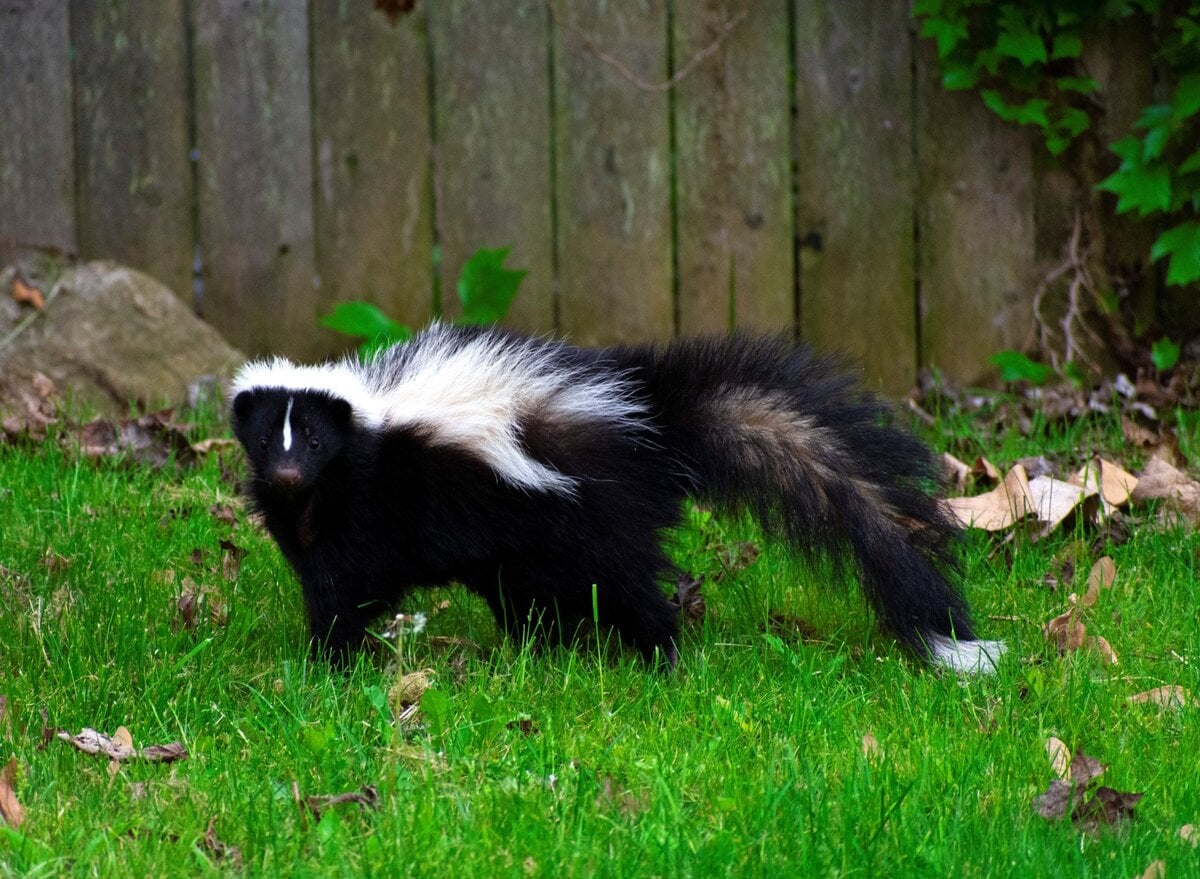
Skunks are generally most active around dusk, nighttime and early morning. They may dig for insects in lawns and seek quiet shelter under decks, sheds, porches or other raised structures. A skunk passing through the yard can be a normal wildlife encounter; repeated digging, an active den or conflict with people and pets calls for a more specific response.
- Distinctive skunk odour, especially around a particular sheltered area.
- Small cone-shaped holes in turf where an animal has been probing for insects; other wildlife may make similar holes.
- Repeated movement beneath a deck, porch or shed.
- Scratching or rustling around the structure during low-light hours.
- Pet encounters or regular activity near doorways and fenced pet areas.
Odour alone does not prove that a skunk is living on the property; the smell can linger or drift from elsewhere. Keep a safe distance rather than trying to provoke the animal into leaving.
START WITH ASSESSMENT
Our approach to investigating a possible skunk den
We ask where the animal has been seen, whether the entrance is beneath an occupied structure, and how often digging, odour or encounters occur. The assessment considers likely entrances, food sources and whether young animals may be present. Evidence may include tracked pathways, photographs from a safe distance and the shape of an opening.
Do not crawl beneath decks or block a den entrance while activity may be ongoing. Hidden young, limited access and the animal’s defensive spray response make improvised work risky. When a den is suspected, timing and wildlife-safe methods matter.
After considering the actual conflict, our team can discuss whether deterrence, attractant reduction, exclusion work or another qualified wildlife service is appropriate.
PRACTICAL OPTIONS
Responsible skunk prevention and exclusion
- Remove attractants. Secure garbage, pet food, exposed compost and accessible outdoor feed.
- Confirm the den is active. Distinguish an animal using a shelter from an old or unused opening.
- Check for dependent young. Do not close off an occupied den or separate a family.
- Consider low-disturbance deterrence. Suitable lighting, changes in access and habitat management may help, depending on the site.
- Seal vulnerable spaces only when clear. Durable mesh or other suitable barriers can be considered after the animal has safely departed, without blocking drainage or ventilation.
The objective is to prevent unwanted sheltering and repeated conflict, not to promise complete removal of all skunks from a neighbourhood. Methods depend on the property layout, species, season and applicable B.C. wildlife requirements. Trapping is not assumed to be necessary or appropriate.
SAFETY & ODOUR
What to do when a skunk is near pets or has sprayed
Give the animal space and move pets indoors without cornering it. Avoid rushing toward the animal, attempting to touch it or sealing its only escape route. If a pet has been sprayed, contact a veterinarian for advice about eye irritation, injuries or other symptoms, particularly if there was direct contact.
Skunk odour management is different from controlling an animal’s access to a structure. Cleaning fabrics, hard surfaces or a crawl space may require separate work depending on contamination, ventilation and materials. Do not mix household chemicals in an attempt to remove odours.
REDUCE REPEAT VISITS
Steps homeowners and managers can take
- Keep garbage lids secured and remove pet food, birdseed spillage and fallen fruit from accessible areas.
- Address lawn grubs or other food sources only after identifying what is actually attracting animals.
- Maintain appropriate barriers under sheds or decks once the area is confirmed unoccupied.
- Provide an unobstructed escape route if a skunk is unexpectedly encountered.
- Teach children to observe wild animals from a distance and keep dogs leashed near active wildlife areas.
- Keep photographs and dates of repeated incidents to help the assessor identify a pattern.
Responsible wildlife work should account for the species, dependent young, available access and applicable B.C. requirements. For independent guidance, see the BC SPCA wildlife-control best practices and the Government of British Columbia wildlife information.
COMMON QUESTIONS
Skunk Control: Frequently Asked Questions
Does skunk smell mean an animal is living under my deck?
Not necessarily. Odour may linger after a passing animal or drift from another area. Evidence of an active den should be confirmed before exclusion.
Can I close the gap under my shed today?
Only after the area is assessed and confirmed unoccupied. Blocking a den can trap animals or separate a mother from young.
Can a skunk spray without warning?
A skunk may display defensive behaviour, but do not rely on seeing a warning. Keeping distance and leaving an escape route is safest.
Does skunk control include odour removal?
Odour cleaning, waste removal and structural exclusion are different scopes of work. Ask us to quote the particular issue.
Are all holes in a lawn caused by skunks?
No. Raccoons and other animals may disturb turf, and insects or soil conditions can also explain damage. Identification is the first step.
Can skunks be relocated to another area?
Wildlife relocation is regulated and may harm animals. We prioritize assessment, prevention and species-appropriate measures rather than treating relocation as an automatic remedy.
Get help with skunk activity at your property
Tell us your city, where you have noticed activity and whether the animal may be inside a roof, attic, shed, deck or other structure. Photos of the affected area are helpful. We can discuss inspection availability, the appropriate approach and a written quote for recommended work.