
Stored-food pests · Source investigation · Prevention
Pantry Moth Control
Flying moths are often only the visible part of a stored-food problem. Absolute Pest Solutions helps Fraser Valley and Lower Mainland customers investigate the source, protect unaffected food and choose an appropriate control plan.
In this guide: Identify the mothFind the sourceControl approachPreparationPreventionService scopeFAQs
Are these pantry moths or clothes moths?
A small moth in a kitchen is a clue, not a complete diagnosis. Pantry moths are associated with stored food, while clothes moths are associated with susceptible fabrics and related materials. An outdoor moth may also enter accidentally. Identifying the insect and where larvae are developing prevents treatment from being directed at the wrong source.
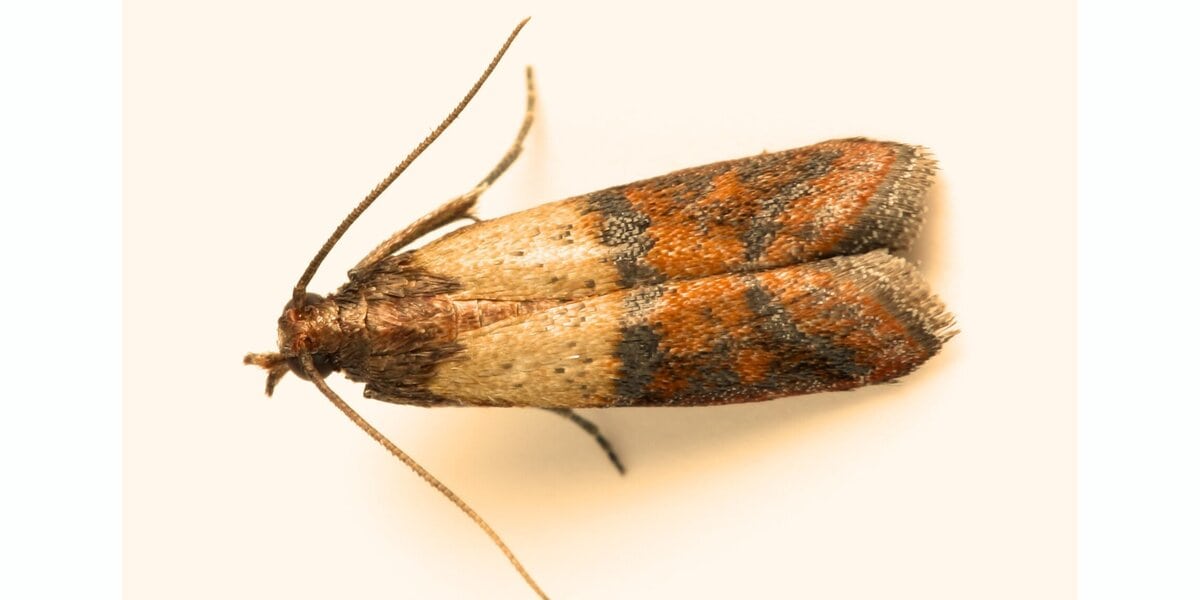
The Indianmeal moth is a familiar stored-product species. Its folded forewings often have a pale inner portion and a darker coppery outer portion. The larvae are caterpillar-like and may be found in food or wandering away to pupate. Webbing in a food package or larvae near shelving provides stronger evidence than an adult resting on a wall. Cornell’s pantry moth guide explains these identification clues.
Photograph the wings clearly, note where the insect was seen and keep any suspected food package separate. Do not assume that moths near a bedroom are clothing pests: mobile larvae or adults can be found away from the original food source. Conversely, treating kitchen cupboards will not resolve a textile infestation elsewhere.
Our carpet beetle guide may help when the evidence involves fabric damage rather than food. If the insect does not match either group, a specimen-based assessment is more useful than guessing from colour alone.
Where pantry moth activity starts
Stored-food pests can arrive in a product before purchase or find suitable food already in the property. The issue is not automatically evidence of poor housekeeping. A forgotten package, bulk container or bag of birdseed can sustain activity even when the kitchen looks clean.
- Check dry foods: flour, cereal, grains, nuts, dried fruit, seeds and similar ingredients.
- Look beyond the pantry: pet food, birdseed, stored treats and rarely used decorative or craft materials containing food.
- Inspect packaging: look for webbing, larvae, clumping or other insect evidence rather than relying only on the expiry date.
- Follow the pattern: repeated sightings in one cupboard or near a stored bag can narrow the investigation.
Adult sightings are not a reliable measure of how much food is affected. Inspection should distinguish confirmed infestation from nearby products that can be checked and retained. The University of Minnesota’s stored-food pest guidance describes why thorough source inspection matters and why moths may still appear after an infested package is removed.
For a business, preserve the product name, lot details, delivery date and storage location when available. These records help trace a source and support decisions about receiving, stock rotation and affected inventory. Avoid transferring suspect ingredients to another storeroom before assessment.
Why source removal comes before spraying
Removing visible adult moths does not remove eggs or larvae in food. An effective plan needs to address the material supporting development. Inspection, disposal of confirmed infested products, suitable cleaning and protected storage are therefore central to pantry moth management. Pesticide treatment cannot make contaminated food suitable to eat.
Inspection and a targeted action plan
Absolute Pest Solutions can help assess the evidence and prioritize areas that need attention. Discuss where moths are being seen, what food is stored and any recent product introductions. The scope should explain whether the work is mainly inspection and monitoring or whether an additional, appropriately labelled treatment is justified.
Monitoring without false reassurance
Species-appropriate pheromone traps can support monitoring, but they are not a substitute for finding infested food. Catch numbers need context: trap location, the monitoring period and source removal all affect interpretation. A trap catching nothing does not prove every shelf or product is clear. Keep traps in their agreed positions and report results rather than moving them repeatedly.
Food-area treatment decisions
Any application around food storage must respect the product label and the site’s use. Do not spray food, food-contact items or occupied cupboards indiscriminately. In a commercial kitchen, work may need coordination with operations and food-safety procedures. The UC IPM pantry pest resource emphasizes inspection and sanitation rather than treating food with pesticides.
Preparing cupboards and stored products
Begin with the specific cupboards, shelves or storage zones where evidence has been found. Photograph suspect products and isolate them in sealed bags or containers. Dispose of confirmed infested food so insects cannot continue spreading from indoor waste. Check adjacent products individually; it is not automatically necessary to discard every item in the building.
Vacuum accessible shelf joints and crevices where ordinary food debris or insect material has collected, then clean shelves appropriately and let them dry before restocking. Dispose of vacuum contents securely. Never mix cleaning chemicals, and follow the technician’s directions about cleaning after any treatment. A superficially wiped shelf can leave hidden crumbs and overlooked products behind.
Make an inventory of areas you could not inspect safely. High storage, fixed cabinetry and commercial equipment may require staff or maintenance assistance. Tell us about food-production schedules, pets, children and any access restrictions before the visit. This prevents assumptions about what can be moved or treated.
Do not use mothballs in a pantry. Products intended for fabric storage are not a remedy for insects in food. Improvised repellents and repeated aerosol use can create additional problems without removing the source.
Keeping dry-food storage easier to protect
Use sound, tightly closing containers for appropriate dry foods, and keep product information so you can trace what was stored. Buy quantities you can reasonably rotate, use older stock first and clean spills promptly. Check packages before adding them to existing stock. Do not pour a new bag onto old residue in a container without inspecting and cleaning it.
Include pet food, birdseed and secondary storage in the routine. A clean main pantry will not prevent recurrence from a forgotten bag in a garage or utility room. Monitor the locations where activity was previously strongest and record new findings. Connecticut’s pantry pest control guidance provides additional source-management and storage advice.
For restaurants, food retailers and facilities, a practical prevention system includes receiving checks, stock rotation, clear shelf access and records that connect insect findings with stored products. Pest service should support those routines, not replace them. We can discuss whether a focused assessment or an ongoing monitoring arrangement better fits your operation.
Service scope, quotations and follow-up
Costs depend on the number of affected storage areas, the volume of products to inspect, access and whether monitoring or further treatment is needed. A single residential cupboard is a different assignment from a stockroom serving several food-preparation areas. Product disposal, inventory losses and specialist cleaning should not be assumed to be included in a pest-control quotation.
Tell us the property type, where moths are appearing, how long the activity has continued and what you have already removed or treated. Ask what the visit includes, which preparation is required and how persistent activity will be reviewed. There is no responsible fixed elimination deadline without understanding the source and remaining life stages.
Pantry moth FAQs
Why do I see moths after throwing away an infested bag?
Some insects may have already left the food to develop elsewhere, or another source may remain. Continue the agreed monitoring and inspect overlooked dry goods. A few later sightings do not automatically mean the original source-removal work failed, but sustained activity warrants reassessment.
Are pantry moths caused by a dirty kitchen?
No. Stored-food insects can arrive in purchased products and develop in a clean property. Cleaning helps remove food residues, but finding affected packages and protecting stored goods are just as important. The investigation should be practical and non-judgmental.
Can I keep food from the same cupboard?
Inspect it individually. Confirmed infested food should be discarded; unaffected products may be retained in suitable sealed storage after assessment. In a food business, follow your food-safety procedures rather than making an informal decision about questionable stock.
Will a moth trap eliminate the infestation?
Not by itself. Monitoring traps can provide useful information about adults, but they do not remove larvae or eggs inside stored food. A plan that relies only on traps can miss the source supporting the population.
Do pantry moths eat my clothing?
Pantry moths are stored-food pests, not the usual cause of damage to wool clothing. Damage to textiles calls for a separate assessment for clothes moths, carpet beetles or other causes. Where the insect was found is helpful, but its identity should still be confirmed.
Can you assess a restaurant or commercial storeroom?
Yes. Share the storage layout, affected ingredients, recent deliveries and operating hours. Access, food protection, inventory handling and monitoring responsibilities can then be considered as part of the proposed service scope.
Local pantry moth assistance
We assist households and businesses in Abbotsford, Chilliwack, Mission, Langley, Surrey, Delta, Burnaby, Coquitlam, Vancouver and surrounding Fraser Valley and Lower Mainland communities. Visit our commercial pest control or residential service pages to discuss the appropriate property context.
Explore related guides for carpet beetles, cockroaches and mice and rats, or return to the Pest Library.
Further reading: Cornell IPM: Pantry moths; University of Minnesota: Stored-food pests; UC IPM: Pantry pests; University of Connecticut: Control measures. Canadian product labels and applicable local requirements govern treatment.
Let’s find what is feeding the problem.
Contact our office with your photos and storage concerns. We will help you plan the next step without treating every flying moth as the same issue.
Find Pantry Moth Control in Your City
Explore local service information, preparation, follow-up guidance and written quote options across Metro Vancouver and the Fraser Valley. View all pantry moth control service areas.