
Home / Pest Library / Wildlife Control / Squirrel
ATTIC ACTIVITY · ROOFLINE ENTRY · BUILDING PROTECTION
Squirrel Control
Scratching in the attic, roofline gaps or repeated squirrel visits? Absolute Pest Solutions provides property-specific squirrel activity assessments for homes and managed buildings across Greater Vancouver, the Lower Mainland and Fraser Valley, with attention to safe access, exclusion and dependent young.
Explore this guide: Signs of squirrel activity around a home Our approach to squirrel inspections How squirrel control and entry-point sealing are planned What about wiring, insulation and attic cleanup? Ways to reduce recurring squirrel visits FAQs Next steps
IDENTIFY THE PROBLEM
Signs of squirrel activity around a home
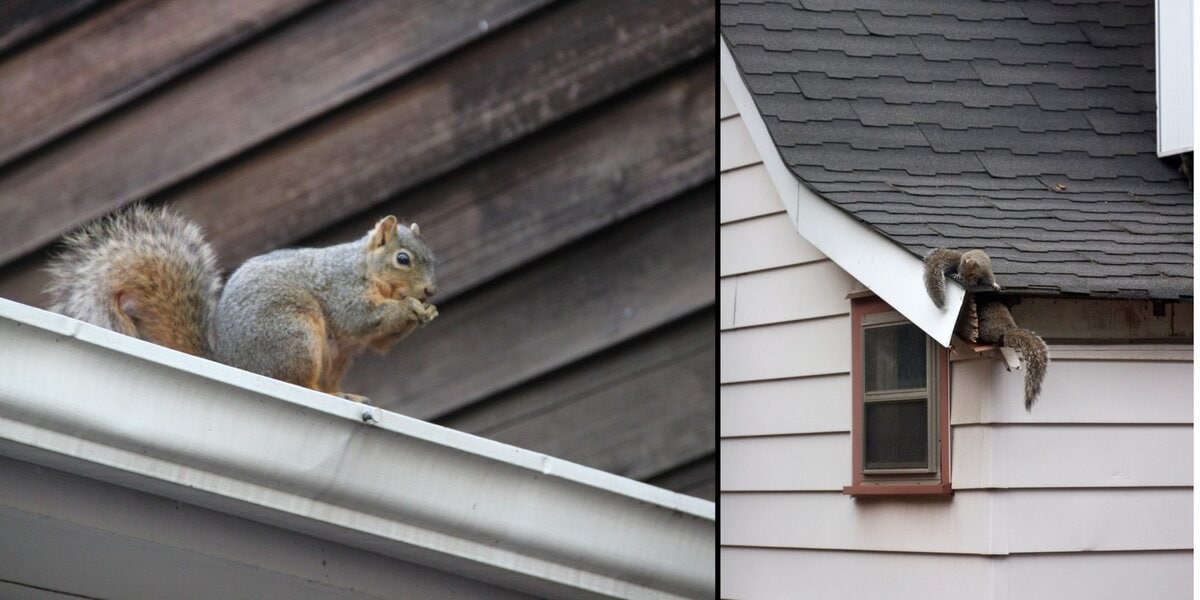
Squirrels are active climbers. They may use overhanging branches, fences and roof edges to reach exterior openings, and can enter accessible attic or wall cavities. Not every squirrel seen in a yard represents a building problem: the important distinction is whether animals are actually entering, nesting or damaging the structure.
- Scratching or quick running sounds near the roof or ceiling, often noticed during daylight hours.
- Repeated trips to the same roof corner, soffit, gable vent or fascia opening.
- Chewed edges or displaced material at accessible vents, eaves or other vulnerable exterior gaps.
- Nesting material or suspected activity in an attic, roof void or shed.
- Unexplained marks or droppings that require identification; do not assume the species from droppings alone.
Noises can also come from birds, mice, rats or raccoons. The timing, access route and visible evidence matter more than a single sound. Avoid reaching into cavities or walking across an unsupported attic area to investigate.
HOW ASSESSMENT WORKS
Our approach to squirrel inspections
A useful squirrel inspection begins outside. We ask when the sounds occur, whether squirrels have been observed using a particular opening and how long the concern has continued. We then review accessible roofline areas, roof-to-wall junctions, vents, overhanging vegetation and points of repeated access.
Where safe and available, interior signs can help establish the extent of the problem. Some areas may require a qualified roofing contractor, specialist access or a separate inspection appointment. We document identified openings and distinguish immediate wildlife concerns from later repairs or prevention work.
The inspector should also consider whether dependent young may be present. A mother squirrel and her babies must not be separated by simply sealing the active entrance. When identification is uncertain, further observation may be necessary before choosing a method.
EXCLUSION & PREVENTION
How squirrel control and entry-point sealing are planned
- Confirm active entry. Locate the likely route and avoid repairing an opening blindly while animals may remain inside.
- Assess young and seasonal conditions. Timing and any family group affect the appropriate removal or exclusion plan.
- Choose species-appropriate measures. Deterrence and controlled exclusion may be considered where feasible, with humane handling and B.C. requirements in mind.
- Close verified openings. Once the space is confirmed clear, suitable screening, metal reinforcement or repairs can help reduce re-entry. Material selection depends on the construction.
- Check neighbouring vulnerabilities. Other openings and food sources may still attract animals after one entry is secured.
Squirrels may chew through inadequate materials, so temporary foam-only closure is generally not the same as durable exclusion. Structural repairs, access equipment and any specialist trade work are quoted according to the property. The goal is to reduce access, not to claim that every visit or animal encounter can be eliminated permanently.
PROPERTY PROTECTION
What about wiring, insulation and attic cleanup?
An animal inside a roof void may disturb insulation, leave waste or damage accessible material. However, visible disturbance is not proof of extensive structural damage. Inspection findings should guide whether cleanup, insulation replacement, disinfection or repairs are warranted.
If wiring looks chewed, exposed or unsafe, stop access to the affected area and have a qualified electrician evaluate it. For soiled insulation, avoid sweeping or vacuuming dry contamination without appropriate controls. Cleanup and insulation work are separate services unless specifically included in the quote.
PRACTICAL STEPS
Ways to reduce recurring squirrel visits
- Keep roofline and soffit openings in good repair, and investigate newly displaced vent covers.
- Prune branches where practical so they do not provide easy access to a vulnerable roof section; use qualified arborists near utilities.
- Secure attic vents and repair damaged screening with suitable materials while allowing intended ventilation.
- Manage birdseed, pet food and other attractive food sources around the building.
- Document new scratching or travel routes promptly instead of blocking a suspected active nesting cavity.
- Do not handle squirrels directly, use poison or attempt unplanned trapping without understanding local requirements.
Responsible wildlife work should account for the species, dependent young, available access and applicable B.C. requirements. For independent guidance, see the BC SPCA wildlife-control best practices and the Government of British Columbia wildlife information.
COMMON QUESTIONS
Squirrel Control: Frequently Asked Questions
Do squirrels always need to be removed?
No. A squirrel using a tree or passing through a yard may not need intervention. Building entry, nesting, repeated damage or a specific conflict are reasons to seek an assessment.
Can you seal the hole immediately?
Not if an animal or dependent young may still be inside. The opening should be assessed, an appropriate method selected, and repairs made when the space is clear.
How do I tell squirrels from rats in my attic?
Activity timing, visible sightings, route of entry, nesting and other evidence can help, but sound alone is not a reliable identification. A site inspection may be required.
Are squirrel babies a concern?
Yes. Young animals may be hidden from view. Methods and scheduling need to take this possibility into account before exclusion work is undertaken.
Does squirrel service include roof repairs?
Only work expressly included in a written quote is included. Major roofing, wiring, insulation and high-access repairs may require a separate specialist.
Do you serve my city?
We receive enquiries from Abbotsford, Langley, Chilliwack, Surrey, Burnaby, Vancouver and surrounding Fraser Valley and Lower Mainland communities; appointment availability depends on location and scope.
Get help with squirrel activity at your property
Tell us your city, where you have noticed activity and whether the animal may be inside a roof, attic, shed, deck or other structure. Photos of the affected area are helpful. We can discuss inspection availability, the appropriate approach and a written quote for recommended work.