
Home / Pest Library / Wildlife Control / Raccoon
ROOF & ATTIC CONCERNS · DENS · RESPONSIBLE EXCLUSION
Raccoon Control
Raccoons around roofs, attic openings, sheds or garbage areas can create recurring problems. Our wildlife assessments focus on confirming the source of the conflict, avoiding separation of young and selecting practical, lawful exclusion and prevention options.
Explore this guide: How to identify raccoon activity on your property What a raccoon assessment includes Raccoon exclusion, deterrence and repairs Raccoon droppings, contamination and repair concerns How to make buildings less attractive to raccoons FAQs Next steps
RECOGNIZE THE SIGNS
How to identify raccoon activity on your property
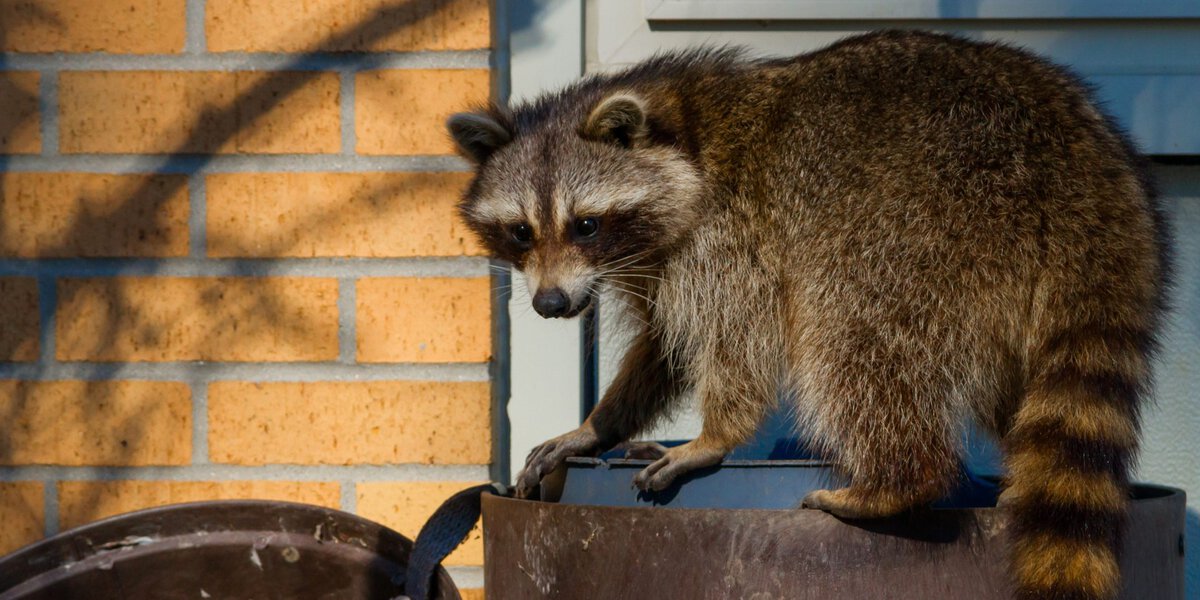
Raccoons are adaptable and often active in the evening or overnight. They may investigate unsecured garbage, pet food, roof edges, chimneys and sheltered spaces. A raccoon travelling across a fence is not necessarily a service issue, but regular building entry, nesting or damage deserves attention.
- Heavy footsteps, thumping or movement near an attic or roof cavity, especially in the evening or overnight.
- Disturbed soffits, vents, roof edges or chimney areas that may provide access.
- Repeated use of a sheltered space under a deck, shed or raised structure.
- Torn garbage bags, displaced lids or pet-food disturbance around the property.
- Droppings or soiling that require careful handling and species identification.
A nest or den can be difficult to confirm visually. Avoid approaching suspected den entrances, reaching into the cavity or forcing an animal to leave. Keep pets and children away from contaminated areas.
ASSESS BEFORE ACTION
What a raccoon assessment includes
We first clarify where the activity occurs, what the animal has been doing, and whether the concern involves building entry, food attractants or outdoor use of the property. Photographs and approximate activity times help determine the inspection priorities.
An accessible exterior inspection can examine roofline damage, soffit gaps, chimney screening, shed foundations and other potential shelter locations. We consider whether a den may contain young, since sealing or one-way exclusion without checking can leave dependent animals trapped or separate them from their mother.
Our recommendations describe the practical options and any limitations. Work involving roof access, chimneys, major repairs or specialized wildlife handling may need separate coordination or a specialist quote.
RESPONSIBLE CONTROL
Raccoon exclusion, deterrence and repairs
- Reduce attractants. Secure garbage, remove outdoor pet food at night and manage accessible compost.
- Identify the active access point. Observe from a safe distance rather than sealing a hole based on one sighting.
- Account for the family group. Where young are present or suspected, wildlife-safe timing and procedures are essential.
- Plan exclusion or deterrence. Non-lethal measures and building protection may be suitable depending on the circumstances.
- Repair and monitor. After the animal is no longer using the space, assess screening, fascia, vents or other repairs and monitor for recurrence.
Capturing an animal is not automatically the safest or most effective solution. Trapping and relocation are subject to provincial rules, species considerations and animal-welfare concerns; moving an animal a long distance is not a standard solution. Service scope and any exclusion work are discussed before booking.
SAFE PROPERTY HANDLING
Raccoon droppings, contamination and repair concerns
Avoid direct contact with raccoon droppings and do not dry-sweep or use an ordinary vacuum on suspected waste. Wear appropriate protection and arrange a suitable assessment if contamination is significant. Raccoon waste can present health concerns; cleaning procedures depend on the site and materials affected.
If an animal has damaged roof components or a chimney cap, a qualified contractor may be required for permanent structural repairs. We can discuss accessible pest-related exclusion and whether cleanup or repairs are included separately in the written scope.
PRACTICAL PREVENTION
How to make buildings less attractive to raccoons
- Use secure garbage containers and avoid leaving pet food outside overnight.
- Repair displaced soffit panels, chimney caps and vent screens after verifying no animals remain inside.
- Keep compost and fallen fruit managed and close openings under sheds where appropriate.
- Do not feed raccoons or attempt close contact for photographs.
- Keep pets away from active dens; seek professional assistance if an animal appears trapped, injured or unusually aggressive.
- Report new nighttime sounds, roof damage or repeated entry promptly.
Responsible wildlife work should account for the species, dependent young, available access and applicable B.C. requirements. For independent guidance, see the BC SPCA wildlife-control best practices and the Government of British Columbia wildlife information.
COMMON QUESTIONS
Raccoon Control: Frequently Asked Questions
Why do I hear loud noises in my attic at night?
Raccoons are one possibility, but other animals can also make roof or ceiling noises. Activity times and exterior inspection evidence help determine the cause.
Can you remove a raccoon and seal the opening the same day?
Sometimes the work must be staged. Species identification, access conditions, any dependent young and the available exclusion method determine the appropriate sequence.
Is trapping and relocation always necessary?
No. Removing attractants, humane exclusion when appropriate and repairing access points may be more suitable. Any trapping must follow applicable regulations and welfare requirements.
What if there are baby raccoons?
Do not seal the den entrance or attempt to separate the mother from her young. The family situation should be assessed and an appropriate plan made.
Do you provide raccoon feces cleanup?
Tell us where the waste is located and how extensive it appears. Cleanup or contaminated-material removal may require a separate site assessment and quote.
Can raccoons come back after entry points are repaired?
Other animals may continue to visit yards or find alternative unprotected openings. Monitoring and reducing food and shelter attractants help lower recurrence risk, but outdoor wildlife cannot be controlled completely.
Get help with raccoon activity at your property
Tell us your city, where you have noticed activity and whether the animal may be inside a roof, attic, shed, deck or other structure. Photos of the affected area are helpful. We can discuss inspection availability, the appropriate approach and a written quote for recommended work.